Environmental conditions are one of the most underestimated factors in coin collecting. Even if you use premium holders and capsules, poor control of humidity, temperature and light can slowly damage your numismatic collection. Corrosion spots, unnatural toning, hazy residues and faded ribbons on medals all result from an unsuitable storage environment.
This article explains the ideal conditions for coin storage and how to achieve them at home. It is aimed at both beginning collectors and experienced numismatists who want to align their storage practices with museum-level preventive conservation. By understanding how air moisture, heat and light interact with metal surfaces, you can greatly increase the long-term stability and value of your coins.
While individual collections and climates differ, the principles discussed here are widely accepted in museum conservation, archival science and serious coin collecting practice. This article is for informational purposes only and does not constitute investment advice.
Basics and Definitions
Before setting up ideal storage for coins, it is important to define the core environmental concepts. The three main factors are relative humidity (RH), temperature and light exposure. Each of these influences how quickly chemical reactions occur on metal surfaces and in surrounding materials such as paper, cardboard, PVC and adhesives.
Relative humidity is the amount of water vapor in the air expressed as a percentage of the maximum the air can hold at a given temperature. Conservation sources for mixed collections commonly recommend a moderate, stable range of 30–50% RH, emphasizing that large or rapid fluctuations do more harm than small shifts around a stable setpoint. (psap.library.illinois.edu) For metal objects like coins, specialist conservation guidance recommends keeping RH as low as practical, ideally below about 30–35% if the collection is primarily metal, but often 35–40% RH is used when coins are part of mixed museum collections. (canada.ca)
Temperature is simply how warm or cold the storage space is, usually measured in degrees Fahrenheit or Celsius. Higher temperatures accelerate almost all chemical reactions, including corrosion and degradation of plastic flips and holders. Many archives and museums operate in a cool range roughly between 60–70°F (15–21°C), balancing preservation needs, building costs and human comfort. (siarchives.si.edu)
Light, especially ultraviolet (UV) radiation, can fade dyes, damage organic components and sometimes drive photochemical reactions on surfaces. Pure metal coins are relatively insensitive to low light, but ribbons attached to medals, paper envelopes, album pages and some surface treatments can be quite vulnerable. Conservation guidelines typically keep light levels for sensitive materials to 50 lux or less and filter UV as much as possible. (canada.ca)
Detailed Explanation
How Humidity Affects Coins
Humidity is the single most critical factor for preventing active corrosion. In the presence of water vapor and atmospheric pollutants such as sulfur compounds or chlorides, metals can form corrosion products ranging from light toning to destructive pitting. Conservation guidance for metals stresses that corrosion rates rise sharply once RH exceeds roughly 35–40%, and for some vulnerable metals any RH above about 30% can be risky over long time spans. (canada.ca)
For numismatic collections this means that a stable, moderately dry environment is ideal. A practical target for many home collectors is about 30–40% RH, which aligns with recommendations for coins and many mixed collections while remaining achievable with common equipment. (preservatech.com) Fluctuations are also important: museum research shows that swings of more than about 10–15% RH, particularly rapid changes within 24 hours, can cause stress and damage to hygroscopic materials, though coins themselves are less sensitive to dimensional changes than wood or paper. (psap.library.illinois.edu)
The Role of Temperature in Coin Storage
Temperature interacts closely with humidity. Cooler air holds less moisture; if you lower temperature without dehumidification, RH can rise even when the absolute water content stays the same. Conservation institutions therefore aim for cool but controlled conditions, often around 60–70°F (15–21°C), with the understanding that excessively low temperatures can cause problems in some plastics and composites. (siarchives.si.edu)
For coin collectors, a moderate, stable room temperature is usually sufficient. Practical guidance from serious collecting resources suggests that average household conditions—roughly 64–78°F (18–26°C)—combined with controlled humidity are acceptable, while avoiding attics, garages or sheds where temperatures can swing widely and reach extremes. (coinsblog.ws) Heat also accelerates the breakdown of low-quality plastic flips and PVC materials, increasing the risk of oily residues and green PVC damage on coins.
Light and Its Effects on Coins and Medals
Most circulating coins in inert holders are comparatively insensitive to moderate light levels, but light still matters for several components of a numismatic collection. Conservation authorities note that ribbons on medals, often made from silk or other dyed textiles, are highly light-sensitive and should be stored in the dark; if displayed, they should receive no more than about 50 lux and minimal UV. (canada.ca) Similarly, album pages, envelopes and supporting paperwork will fade and become brittle more quickly under constant illumination.
Direct sunlight is particularly harmful because it combines high light intensity, ultraviolet radiation and heat. Even coins that do not obviously fade can develop uneven toning patterns if parts of the surface receive more light and heat than others. Long-term, low-level lighting in display cabinets is safer if UV is filtered and temperatures are monitored, but dark storage is best when coins are not being actively viewed.
Interactions Between Environment and Storage Materials
Humidity, temperature and light do not act in isolation; they influence how storage materials behave. At high humidity and temperature, cardboard, paper and some plastics release acids, sulfur compounds and plasticizers more rapidly, which can then react with metal surfaces. (amnh.org) Low-quality PVC flips are notorious for developing an oily film that adheres to coins; high heat and high RH accelerate this process.
Conversely, a well-designed microclimate—such as a tight storage case with controlled humidity—can buffer coins from short-term external fluctuations. Museum microclimate guidance emphasizes using well-sealed cases, desiccants and appropriate materials to keep conditions stable around sensitive collections. (psap.library.illinois.edu) For coin collectors, this translates into choosing inert holders (e.g., hard acrylic capsules, Mylar flips, acid-free cardboard with Mylar windows) and combining them with environmental control.
Practical Step-by-Step Guide
Step 1: Assess Your Current Storage Environment
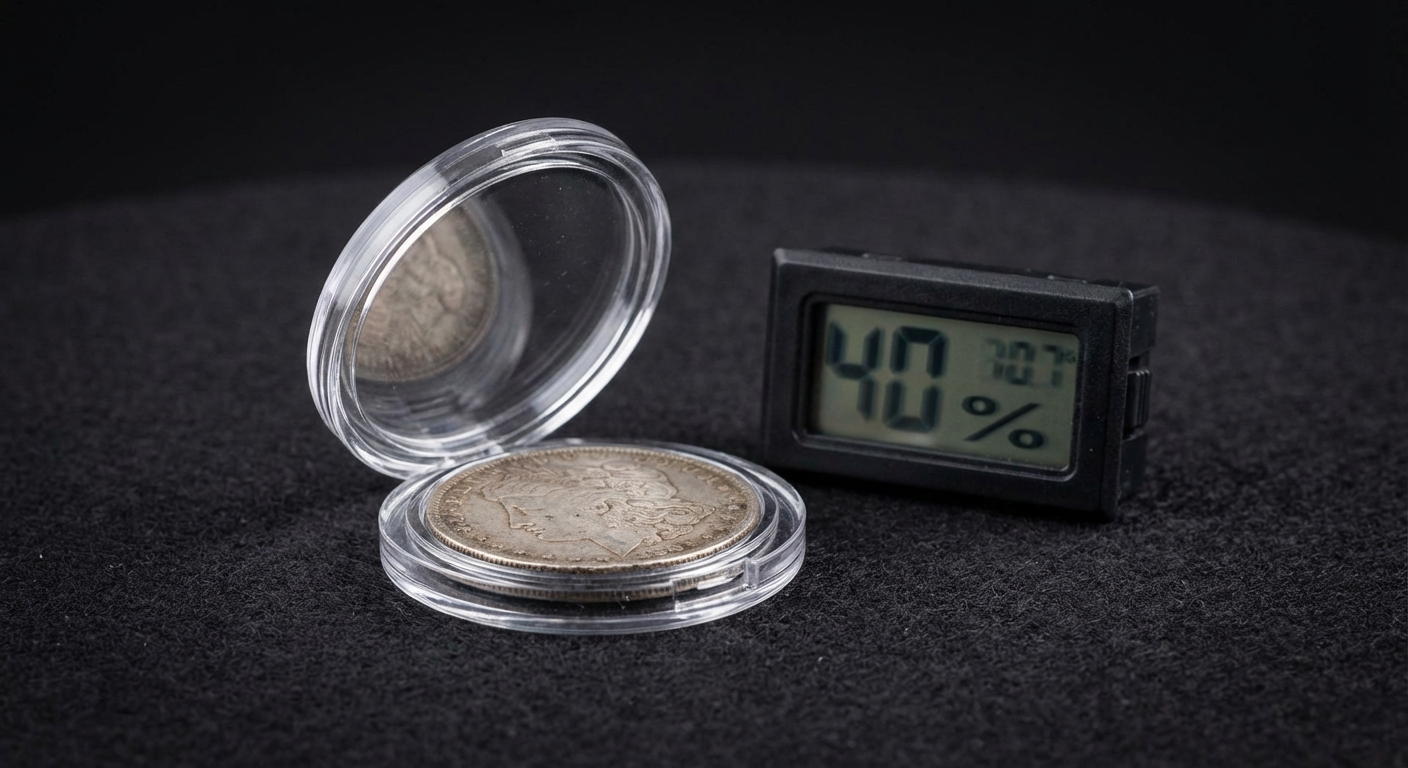
Start by identifying where your coins are stored today: a safe, closet, basement, safe deposit box or display cabinet. Record basic environmental data using an inexpensive digital thermometer–hygrometer. Aim to log temperature and RH over at least a week to understand daily swings. Museum and conservation organizations emphasize that regular monitoring is the foundation of any environmental control program. (siarchives.si.edu)
Compare your readings to target ranges: roughly 30–40% relative humidity and about 60–75°F (15–24°C) for most home coin collections. (preservatech.com) Note any locations with large daily swings, excessive heat or very high humidity. These are red flags that may require relocating the collection or applying more active control.
Step 2: Choose a Suitable Location in the Building
Select a storage area that is inherently stable. Conservation guidance for archives recommends avoiding basements, attics and exterior walls, because they are prone to moisture, leaks, temperature extremes and infiltration. (psap.library.illinois.edu) Interior closets or rooms with limited windows usually provide better passive stability. If you use a home safe, place it in such a location rather than in a garage or unfinished basement.
Ensure the space is clean, free from obvious mold or dampness, and not used for activities that generate pollutants or moisture (such as laundry, water heaters or chemical storage). Reducing external stress on the environment means your control measures will work more effectively.
Step 3: Control Humidity with Simple Tools
Once you have a decent location, refine humidity. For slightly high RH (e.g., 45–60%), small dehumidifiers, air conditioning or moisture absorbers can help lower ambient moisture. Conservation sources recommend desiccants like silica gel inside enclosed cases or cabinets to create a drier microclimate around sensitive materials; this approach is widely used for metals and numismatic collections. (canada.ca)
If the air is very dry (e.g., below about 25–30% RH), which can occur in winter in heated climates, a room humidifier can bring the level up into a safer moderate range. (collectioncare.org) Extremely low humidity is less dangerous to coins than to organic materials, but it can cause issues for albums, boxes and associated documents.
Step 4: Stabilize Temperature
After humidity, address temperature. In many modern homes, a central HVAC system already maintains temperatures within a safe range for coin storage. If your readings show temperatures regularly exceeding about 80°F (27°C) or dropping near freezing, reconsider the storage location. Conservation institutions generally favor cool storage around 60–70°F (15–21°C), and avoiding extremes is more important than achieving a perfect number. (siarchives.si.edu)
Use insulation and sealing to reduce rapid changes. For example, placing coin boxes in an insulated cabinet within a conditioned room will slow temperature swings and provide a buffer during short heating or cooling outages.
Step 5: Manage Light Exposure
Store coins and medals in the dark when they are not being viewed. Conservation guidance for light-sensitive textiles and ribbons emphasizes dark storage and very low light levels when on display, generally not exceeding 50 lux, with strong UV filtration. (canada.ca) For a home collector, this translates simply into keeping albums closed, using cabinets or drawers rather than open shelving, and avoiding display in direct sunlight.
If you maintain a permanent display, use LED lighting with low UV output, keep the lights off when not in use and avoid placing cabinets near windows or heat sources. Consider UV-filtering films or shades on windows if the room is bright.
Step 6: Use Appropriate Holders and Cases
Environmental control works best when combined with proper storage materials. Conservation notes for coins and medals stress using inert materials and tight enclosures, with RH control via silica gel where needed. (canada.ca) Choose high-quality hard plastic capsules, archival-grade flips (Mylar or polyester, not PVC) and acid-free boxes or albums designed for numismatic use.
Organize coins in trays, boxes or cabinets that allow air around holders but are still reasonably sealed so that internal conditions change slowly. Adding conditioned silica gel packs to safes and boxes is a widely used practice among both collectors and museums for fine-tuning humidity inside small volume enclosures. (psap.library.illinois.edu)
Step 7: Monitor and Adjust Over Time
Environmental control is an ongoing process, not a one-time setup. Conservation institutions emphasize continuous or periodic monitoring of temperature and RH, combined with regular condition checks of the collection. (siarchives.si.edu) Check devices monthly or seasonally, review data logs from smart sensors if you use them and inspect a sample of coins for new spots, toning or residues.
Small, gradual adjustments are safer than abrupt changes. For example, if your RH sits constantly around 50%, slowly increase dehumidification until you reach 40–45%, then evaluate whether further reduction is necessary based on the types of metals and mixed materials in your collection.
Common Mistakes and How to Avoid Them
Storing Coins in Basements, Attics or Garages
Basements and attics often experience high humidity, leaks and wide temperature swings. Conservation and archival guidelines repeatedly warn against these locations for sensitive collections. (psap.library.illinois.edu) To avoid mold, corrosion and condensation, always favor interior spaces with some degree of climate control.
If you must use a marginal location, create a controlled microclimate inside a sealed cabinet or safe with silica gel and monitor conditions closely. However, relocating the collection to a better area is usually the safer long-term solution.
Ignoring Humidity Because Coins Are in Capsules
Many collectors assume that airtight capsules eliminate environmental risks. In practice, even high-quality capsules allow some slow air exchange, and the internal air volume can trap moisture present when the capsule was closed. Conservation sources recommend monitoring and controlling the broader environment even when micro-enclosures are used, and using desiccants to manage RH in cases with metal objects. (canada.ca)
To avoid this mistake, treat capsules and holders as one layer of defense, not a complete solution. Keep ambient RH in the recommended range and periodically inspect coins in long-term storage, even if they are encapsulated.
Using PVC Flips and Reactive Materials
Low-cost PVC flips remain in circulation, but at elevated temperature and humidity they can release hydrochloric acid and plasticizer oils that form sticky, greenish residues on coins. Conservation and numismatic literature strongly discourage PVC for permanent storage, especially in uncontrolled environments. (canada.ca)
Replace any suspect flips with PVC-free alternatives such as polyester or Mylar holders and store them in acid-free envelopes, boxes or albums. Ensure the environmental conditions are moderate so even these safer materials age slowly.
Exposing Medals and Paper Items to Strong Light
Displaying medals with their ribbons in windows or brightly lit rooms can quickly fade colors and weaken fibers. Conservation guidance sets very low light limits for textiles and dyed materials, highlighting that light damage is cumulative and irreversible. (canada.ca)
To avoid this, show particularly important pieces only occasionally under good lighting, then return them to dark storage. For permanent displays, minimize brightness, filter UV and keep the display covered when not in use.
Failing to Monitor and Document Conditions
Without monitoring, collectors often underestimate how unstable their environment is. Conservation organizations stress that data logging and periodic checks are essential to identify problems early, such as seasonal humidity spikes or HVAC failures. (siarchives.si.edu)
Record environmental readings and note any changes in coin appearance during routine inspections. This simple documentation allows you to correlate issues like new spots or toning with past conditions and adjust your setup accordingly.
Connection to Online Tools
Modern collectors can enhance environmental control by integrating online tools and apps. Many digital hygrometers and smart sensors now connect to Wi‑Fi or Bluetooth, allowing you to log temperature and humidity, set alerts and review historical trends through cloud dashboards. This approach mirrors museum practices, where data loggers provide continuous insight into storage conditions. (siarchives.si.edu)
In addition, online collection management systems can record where each coin is stored, note environmental goals for specific cabinets or safes and link to maintenance schedules for dehumidifiers and silica gel regeneration. Some platforms also allow you to attach photographs and conservation notes, helping you track whether changes in storage conditions correlate with changes in coin surfaces over time.
Summary
For optimal coin storage, aim for a stable environment of roughly 30–40% relative humidity and a moderate temperature around 60–75°F (15–24°C), while minimizing light exposure when coins are not being viewed. These targets are consistent with conservation guidelines for metals and realistic home conditions. (canada.ca)
Combine this controlled environment with inert holders, sealed cabinets or safes and regular monitoring using digital instruments or smart sensors. Avoid basements, attics and garages; replace PVC with archival materials; and store medals with ribbons and paperwork in the dark. (psap.library.illinois.edu)
By following these practical steps, collectors and numismatists can significantly slow corrosion and other forms of deterioration, preserving both the beauty and numismatic value of their coins for future generations. Remember that environmental control is preventative care: small, consistent efforts today will prevent difficult and sometimes irreversible problems tomorrow.
Frequently Asked Questions (FAQ)
What is the best humidity level for coin storage?
A practical target for coin storage is around 30–40% relative humidity. Conservation guidance for metal objects recommends keeping RH as low as practical, ideally below about 30–35% for metals, but many mixed collections use 35–40% as a realistic compromise. (canada.ca) Keeping humidity stable within this range is more important than hitting a precise number.
What temperature should I store my coin collection at?
A moderate, stable room temperature—roughly 60–75°F (15–24°C)—is suitable for most coin collections. Archives and museums often operate around 60–70°F to slow chemical reactions while maintaining human comfort. (siarchives.si.edu) Avoid extremes such as hot attics or freezing garages, and monitor for large daily swings.
Are coin capsules enough protection against humidity?
Coin capsules greatly reduce direct handling and slow environmental changes but are not a complete barrier to moisture. Even tight capsules can trap the air and humidity present when they are sealed and allow slow exchange over time. Conservation practices still recommend controlling ambient RH and using desiccants in cabinets or safes that house metal objects. (psap.library.illinois.edu)
Is it safe to display my coins and medals in sunlight?
No. Direct sunlight combines intense visible light, UV radiation and heat, which can fade medal ribbons, damage album materials and cause uneven toning on coins. Conservation standards for sensitive textiles limit light to very low levels and recommend dark storage when objects are not being viewed. (canada.ca) Use shaded locations and low-UV lighting for any long-term display.
Can I store my coin collection in the basement or attic?
Basements and attics are generally poor choices due to high humidity, risk of leaks and extreme temperature swings. Conservation and archival guidance strongly advises against such locations for valuable collections. (psap.library.illinois.edu) Instead, use an interior room or closet with better climate control and supplement with dehumidifiers and silica gel if needed.
