
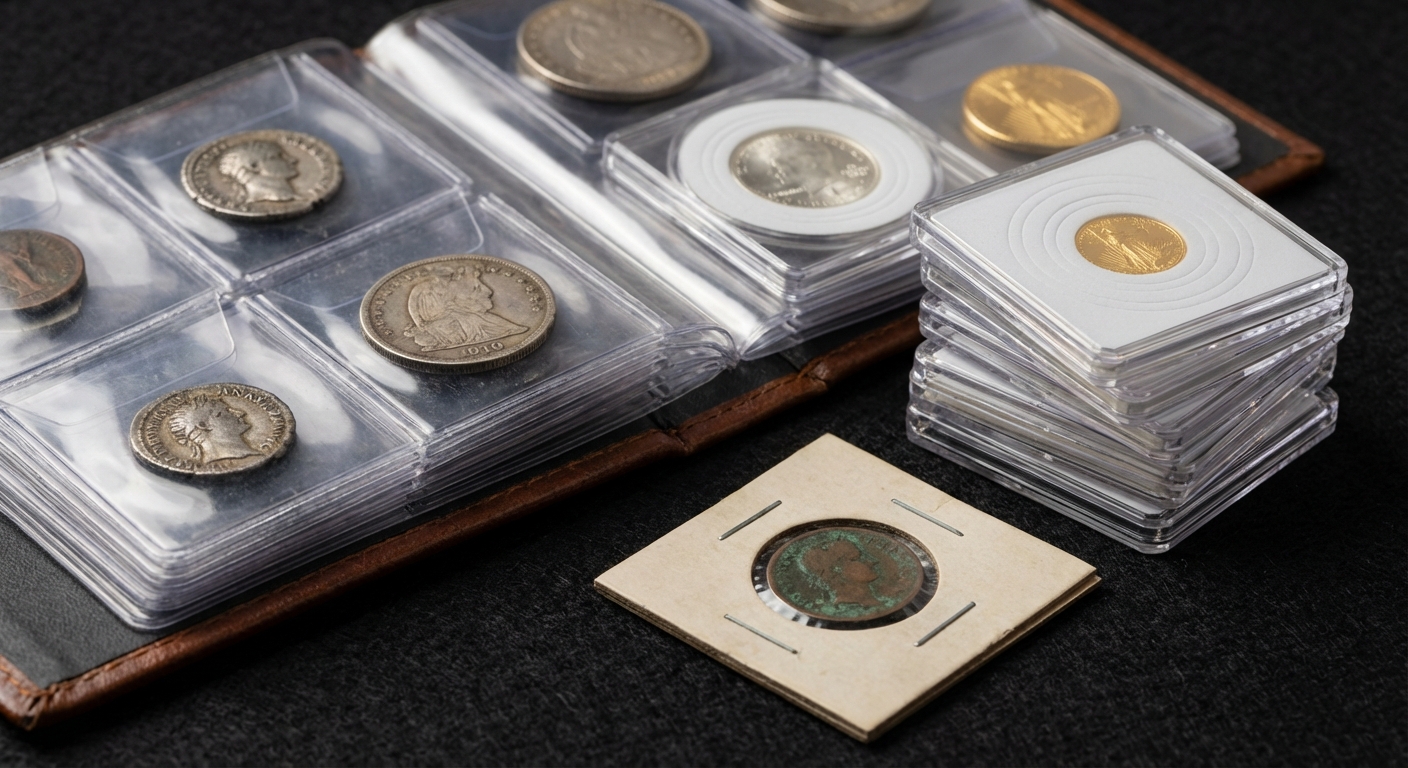
Choosing the right storage solution for your coin collection is one of the most critical decisions a numismatist or collector can make. One of the most important safeguards you can put in place to guard against postproduction damage to your coin collection is choosing the right storage solution. (coinauctionshelp.com) Whether you are a beginner building your first collection or an experienced numismatist managing valuable specimens, understanding the differences between capsules, holders, and albums will directly impact the preservation and future value of your coins. Each storage method offers distinct advantages and drawbacks, and the best choice depends on your specific collecting goals, budget, and the types of coins you own.
The stakes are high when it comes to coin preservation. Properly storing your coin collection matters if you want to preserve your coin’s condition and cultural and historical appeal. Coins are vulnerable to damage from various factors such as humidity, air, and temperature changes. Additionally, mishandling your coins can lead to physical harm, such as scratches or dings. (www.lighthouse.us) Without proper storage, even the most valuable or historically significant coins can lose considerable value through oxidation, tarnishing, physical damage, or chemical degradation. This guide will walk you through the three primary storage options available to collectors, examining each method’s protection capabilities, presentation qualities, and cost-effectiveness.
Basics and Definitions
Coin Capsules, also referred to as “caps” are hard-plastic cases. They are generally circular, but sometimes they are shaped to match the coin they are meant to house. (www.safepub.com) These individual protective containers represent one of the most secure storage methods for valuable or delicate coins. Air-Tite coin holders and capsules are made in the USA of crystal-clear acrylic. They are available as direct-fit coin capsules as well as popular ring-type holders for all sizes of coins. (www.govmint.com)
Coin Flips, sometimes referred to as Coin Pockets, are clear pockets that fold in half, generally designed to hold one coin. These can be made from Plastic, PVC, or Mylar, and range anywhere from 1.5 to 2.5 inches when folded in half. Most people will place a coin in one side of the pocket and either leave the other side empty to allow for unobstructed view of the coin or place a little card with identifying information into it. (www.govmint.com) Coin flips are economical and popular among dealers and collectors seeking compact storage.
Coin Collection Albums are albums or little books that are often made of cardboard and that have multiple removable pages outfitted with slots to house raw coins. Such albums will often allow the collector to organize and label their collection to some extent. Some of the most common and respected coin albums available to collectors are Whitman and Dansco Albums.
Understanding Your Storage Options
Coin capsules are perfect for storing individual coins in a protective plastic case. When investing in high-value or rare coins, capsules provide exceptional protection. They’re great for keeping your coins safe from scratches, drops, dirt, and other contaminants. Coin capsules also allow you to view both sides of your coin through a transparent plastic. However, the downside is that they are bulkier and may cost more than other options if you have a large amount of coins to store. They also make it harder to label your coins.
Coin flips are popular because they offer a nice balance of protection and accessibility. They prevent scratches and fingerprints and include labeling space. They’re also relatively affordable. While coin dealers are often seen using coin flips, this option is ideal for any coin collector. Nevertheless, collectors must be cautious about material composition. The main downside is that some plastics contain PVC can very harshly react with the metal content of coins. Eventually heat and light will cause PVC to break down creating a mild acidic reaction when it interacts with the metals of the coin. This leads to residual deposits on the coin that appear as milky, green, or gray streaks or even a haze.
A coin album has the benefit of storing, protecting, and organizing large amounts of coins and allows you to see both their obverse and reverse. However, they may cost more than alternatives, and some plastics may leach trace chemicals onto your coins. The plastic used in such albums, PVC free or not, can mark your coins with what are known as “slider marks.” If too firm of a plastic is used, a coin can become scratched when inserted and removed from the slots of coin albums.
Practical Step-by-Step Storage Guidance
Use individual holders. Each coin you own should get its own individual container. When you buy from a reputable dealer, you’ll almost certainly receive your coins in a plastic flip or capsule. However, for any coins that come to you without one, you should buy some flips to remedy the situation as soon as you can.
Begin by assessing your collection’s value and composition. Select capsules for high-value or rare coins that require maximum protection. Use coin flips for mid-range pieces and albums for thematic or larger collections where organization and presentation are priorities. Use acid-free cardboard and plastic holders free from polyvinyl chloride (PVC). Acid and PVC can ruin a coin’s surface.
Next, handle your coins properly during storage. Hold a coin by its edges between your thumb and forefinger over a soft towel or surface. Wear soft cotton gloves to protect the coin’s surface from fingerprints and the natural oils on your skin, which can be corrosive. Place each coin into its selected holder with care to avoid scratches. Store coins in a stable environment with constant temperature and humidity. Rapid fluctuations can cause coins to tarnish. Maintain room temperature and low humidity.
Finally, organize your collection systematically. Many models have space for you to record any relevant information about your coins like dates, mint marks and so on. Using these products, you can keep your coins safe at the same time that you get organized. Label your holders with essential details and maintain a digital inventory of your collection for insurance and cataloguing purposes.
Common Storage Mistakes and How to Avoid Them
Mistake 1: Using PVC-Containing Holders – Many budget coin flips contain PVC, which degrades over time and releases chemicals that damage coins. Avoid PVC holders at all costs – they degrade and release chemicals that damage coins! Instead, choose Mylar or acid-free plastic alternatives that won’t compromise your collection’s integrity.
Mistake 2: Storing Coins in Poor Environmental Conditions – It is crucial to avoid poor storage practices that can lead to corrosion. Exposure to air, moisture, and extreme temperatures can be detrimental. To prevent this, store your coins in airtight containers with desiccants. Avoid attics, basements, or areas with temperature and humidity fluctuations.
Mistake 3: Cleaning Coins Before Storage – It’s tempting to polish up your coins before putting them inside a nice, fresh case. However, you should almost never try to clean or alter your coins from how they are currently, as the value of most coins is based on their originality and numismatic integrity. If you were to alter them then you can potentially strip the coins of what most collectors prize and look for in their coins, thereby harming their value and causing them to be worth less in the marketplace.
Mistake 4: Mixing Different Storage Methods Without Consideration – Each storage type serves different purposes. Don’t use album pages for valuable slabbed coins or capsules for casual bulk storage where albums would be more efficient. Match your storage method to your coin’s value and your collecting goals.
Integration With Digital Collection Tools
Modern collectors increasingly combine physical storage with digital inventory systems. You can also use an app to identify coin by picture online, digitize and track your collection. It will make organization and valuation easier. This app provides access to a digital database. So, collectors have the ability to learn about and manage their collections without the need for physical storage solutions. Digital cataloguing tools complement your physical storage solution by creating a backup record of your collection, documenting provenance, tracking condition changes over time, and facilitating insurance claims or estate planning.
Many collectors photograph their coins and holders, then store images alongside detailed metadata in cloud-based platforms or specialized numismatic software. This dual approach ensures that even if physical damage occurs, you maintain complete documentation of your collection’s contents and their acquisition history.
Summary and Key Recommendations
Selecting the right coin storage option requires balancing protection, presentation, accessibility, and budget. For valuable or rare coins, PVC-free Air-Tite coin capsules offer superb long-term protection and will improve the appeal of your collection. For collectors beginning their journey or managing mid-range pieces, coin albums are beneficial if you’re just starting your coin-collecting journey, but some experts also prefer them. Whatever your choice, prioritize acid-free and PVC-free materials, maintain consistent environmental conditions, and handle coins with care.
Invest in proper storage immediately—the cost of protective holders is minimal compared to the potential loss of value from poor preservation. Document your collection digitally, maintain detailed records, and reassess your storage system as your collection grows. Remember that the goal of storage is not just protection but also enabling you to enjoy and appreciate your coins for years to come while preserving their numismatic and historical significance for future generations.
Frequently Asked Questions (FAQ)
Should I use coin capsules or flips for my collection?
Coin capsules are perfect for storing individual coins in a protective plastic case. They’re great for keeping your coins safe from scratches, drops, dirt, and other contaminants. The downside is that they are bulkier and may cost more than other options if you have a large amount of coins to store. They also make it harder to label your coins. While useful for beginners, this option may be best for experienced coin collectors or users concerned about protecting a particular coin.
Can I use a coin album for valuable coins?
Coin albums work well for collections you plan to view frequently and for organizing thematic or type collections. However, for high-value coins or rare specimens, professional-grade capsules or even professional grading and slabbing services like PCGS or NGC offer superior protection. Albums are best suited for coins of moderate value where presentation and easy access are priorities.
What materials should I avoid in coin storage?
Use acid-free cardboard and plastic holders free from polyvinyl chloride (PVC). Acid and PVC can ruin a coin’s surface. PVC eventually coats a coin with sticky green slime. Always verify product specifications and choose premium-quality storage solutions from reputable numismatic suppliers.
How should I store coins if I want to display them?
Some collectors utilize coin albums as they allow you to view the coin from both the obverse and reverse, while protecting the coins with a plastic film that covers each coin slot. The ability to remove and add pages also allows for easy organization and expansion of coin collections. Alternatively, professional slabs or premium capsules placed in display cases offer both protection and visual appeal.
What is the most secure storage location for coins?
Invest in a high-quality safe or lockbox that is preferably fireproof and equipped with anti-tamper features. Utilize a bank safety deposit box for a secure facility provided by a bank, you can ensure protection against theft and damage. Consider a professional coin storage facility: These specialized facilities offer climate-controlled and secure storage specifically designed for numismatic collections.
