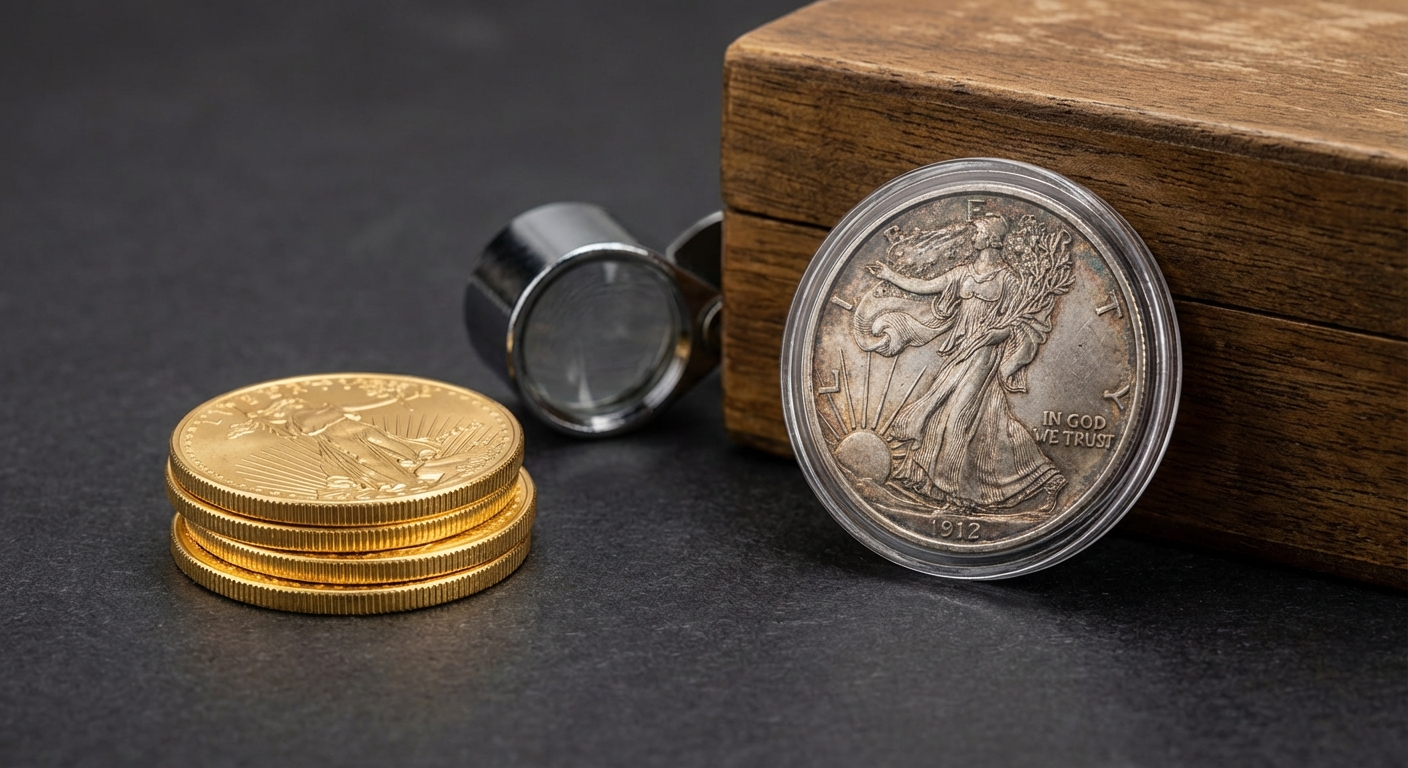
Bullion coins and collector coins often sit side by side in dealers’ cases and auction catalogues, yet they play very different roles in a numismatic collection. Understanding how they differ in value, risk and use is essential whether you are building a coin collection, diversifying savings, or simply curious about precious metal coins.
This article explains the key differences and uses of bullion coins vs collector coins in clear, practical terms. You will learn how each type is valued, where they fit in a numismatic collection, and how to avoid common pitfalls when buying or selling. This article is for informational purposes only and does not constitute investment advice.
The focus is on modern gold and silver issues, but the same principles apply broadly to platinum, palladium and historical coins that trade for either their metal value or their numismatic (collector) value.
Basics and Definitions
In numismatics, the first step is to distinguish between value based mainly on metal content and value based on collectability. Bullion coins sit firmly in the first category, while collector (numismatic) coins sit in the second.
A bullion coin is a coin struck from highly refined precious metal (usually gold, silver, platinum or palladium) and held primarily as a store of value or investment, not for everyday circulation. Its price is driven mainly by its weight and fineness of metal plus a relatively small premium over the spot price. Modern bullion coins are issued by government mints, carry a legal-tender face value and state their weight and purity on the coin. (en.wikipedia.org)
Common examples include the American Gold Eagle and American Silver Eagle, Canadian Maple Leaf, South African Krugerrand, Austrian Philharmonic and Australian Kangaroo bullion series, all of which trade very close to their melt value with modest premiums. (en.wikipedia.org)
A collector coin (often called a numismatic coin) is valued primarily for factors such as rarity, condition, age, design and historical significance rather than just its metal content. Numismatic coins may contain precious metal, but their market price can be many times higher than melt value because collectors compete for scarce, desirable pieces. (americanbullion.com)
The difference in what drives value is crucial: bullion coins are usually priced at metal value plus a small premium, while collector coins are priced by supply and demand in the numismatic market, including grading, mintage and provenance.
Bullion Coins vs Collector Coins: Key Differences and Uses
Although both types are legal-tender coins, bullion and collector coins serve distinct purposes in coin collecting and precious metal ownership. The table below summarizes the main contrasts before we discuss them in detail.
- Primary value driver: metal content (bullion) vs rarity and collectability (collector coins)
- Premiums: low, transparent premiums (bullion) vs often high, variable premiums (collector coins)
- Liquidity: easy to sell near spot price (bullion) vs more specialised markets and buyers (collector coins)
- Risk profile: strongly tied to metal prices (bullion) vs dependent on collector demand and grading (collector coins)
- Typical buyer: investors, savers, beginners (bullion) vs experienced collectors, specialists (collector coins)
How Value Is Calculated: Melt vs Numismatic Value
For bullion coins, the core concept is melt value, sometimes called intrinsic value. Melt value is the worth of the precious metal in the coin, calculated by multiplying the coin’s fine metal weight by the current market price of that metal, adjusted for purity or fineness. (govmint.com)
Collector coins, by contrast, have numismatic value—the additional worth a coin gains from scarcity, historical importance, mint errors, aesthetic appeal, demand and especially condition. This value can far exceed melt value, and it is assessed by reference to grading standards, mintages and recent auction results. (americanbullion.com)
Design, Finish and Mintage
Many bullion coins feature relatively simple, repeat-use designs, are struck in large mintages and have a standard business-strike or bullion finish. Their goal is to deliver as much standardized metal as efficiently as possible, not to achieve artistic or technical perfection. (en.wikipedia.org)
Collector coins often receive special treatment: proof or special uncirculated finishes, multiple strikes for sharper details, selective gilding or color, and very limited mintages. The Perth Mint, for example, notes that its numismatic issues use proof-quality finishes, often with mintages between roughly 50 and 5,000 pieces, while bullion issues are produced in far higher quantities and usually with a simpler, uniform finish. (perthmint.com)
Liquidity and Market Behaviour
Bullion coins are among the most liquid forms of physical precious metal. Popular issues like the American Eagle and Canadian Maple Leaf trade in deep global markets and can be sold rapidly at prices close to spot, with premiums typically in the low single-digit percentage range above melt. (goldsilver.com)
Collector coins can be less liquid: to realize their full value you usually need access to specialist dealers, auctions or online numismatic marketplaces. Prices may not move in lockstep with metal markets; in some cases they rise even when bullion prices are flat or falling because of increased collector interest in specific series or grades. (copperstatecoin.com)
Risk and Suitability for Different Buyers
Because bullion values track spot prices closely, they are often considered lower-risk for people primarily focused on metal exposure or wealth preservation, assuming they buy from reputable sources. Premiums are relatively transparent and easy to compare across dealers. (goldsilver.com)
Collector coins carry additional risks: mis-grading, counterfeits, overpaying for hype, and difficulty reselling niche material. Their premiums can be 20–100% or more above melt, and those premiums may shrink if collector tastes change. Reputable grading services and auction records help, but navigating this market well usually requires more experience. (americanbullion.com)
Practical Step-by-Step Guide: Choosing and Using Each Type
Whether you identify more as an investor, a collector or a blend of both, a structured approach will help you decide between bullion coins and collector coins for your goals.
Step 1: Clarify Your Primary Objective
Ask yourself if your main goal is to own precious metal as a hedge or store of value, or to build a numismatic collection that emphasizes history, rarity and artistry. Many people do both, but separating the objectives helps you measure success more clearly and choose appropriate coins. (goldsilver.com)
Step 2: Start with Core Bullion (If Metal Exposure Matters)
If metal exposure is important, begin by assembling a core position in widely recognized bullion coins. Consider issues such as American Eagles, Canadian Maple Leafs, Krugerrands, or other major bullion series listed in mint and investment guides. These coins are easy to price by reference to spot metal prices and are readily accepted by dealers worldwide. (en.wikipedia.org)
When buying bullion, focus on:
- Low premiums relative to spot price
- Recognized mints and legal-tender issues
- Transparent buy-back policies from dealers
Step 3: Learn the Basics of Numismatic Value Before Buying Collector Coins
Before paying large premiums for collector coins, study how numismatic value is created. Read major grading-service resources, auction house descriptions, and standard references on your chosen series. Look at how grade, mintage and demand interact. (americanbullion.com)
Third-party grading companies such as NGC and PCGS (often cited by dealers and educational articles) assign standardized grades, which strongly influence prices for collector coins. Many guides note that higher certified grades can multiply a coin’s value compared to an ungraded or lower-grade specimen. (copperstatecoin.com)
Step 4: Decide How to Combine Bullion and Collector Coins
Many numismatists maintain a two-tier approach:
- A bullion foundation for metal exposure and liquidity
- A collector portfolio of carefully researched coins chosen for rarity, historical interest or artistic design
For example, a U.S. collector might hold American Silver Eagles and gold bullion as the core, while selectively adding Morgan dollars, Saint-Gaudens double eagles, or modern limited-mintage proof issues as collector pieces. (jmbullion.com)
Step 5: Store and Document Your Coins Properly
Both bullion and collector coins benefit from proper coin storage. Use inert holders (such as hard plastic capsules, archival flips, or certified slabs) and keep coins in a stable, dry environment away from direct handling to avoid fingerprints, hairlines or other damage that can reduce value. Many mints and grading services emphasize that condition is a key driver of numismatic value, and careless storage can undo much of a coin’s premium. (copperstatecoin.com)
Maintain an inventory with purchase dates, costs, grades, and sources. This documentation helps with insurance, eventual resale and estate planning.
Common Mistakes and How to Avoid Them
Even experienced collectors occasionally blur the line between bullion and collector coins. Being aware of frequent errors will help you protect both your enjoyment and your capital.
Paying Numismatic Prices for Essentially Bullion Coins
One of the most common mistakes is paying large premiums for modern bullion issues that are not genuinely scarce and are unlikely to develop strong numismatic demand. While some special finishes and limited editions do become collectible, many heavily marketed pieces remain tied closely to their melt value over time. Articles from bullion and numismatic dealers warn that investors sometimes overpay for flashy packaging rather than proven rarity. (americanbullion.com)
To avoid this, check mintage figures, secondary-market prices and auction results rather than relying solely on promotional claims.
Ignoring Grading Standards
For collector coins, ignoring grading is a serious error. Numismatic guides emphasize that small changes in grade (for example, from About Uncirculated to Mint State) can mean very large changes in value. (copperstatecoin.com)
Educate yourself using published grading standards and, where appropriate, buy coins certified by respected third-party grading services. When buying raw (ungraded) coins, assume more risk and price them accordingly.
Confusing Liquidity of Bullion with Liquidity of Collector Coins
Another mistake is assuming that all coins are equally easy to sell. Bullion coins can usually be sold rapidly at near-spot prices, while niche collector coins may require time to find the right buyer and may be subject to wider bid–ask spreads. (copperstatecoin.com)
Plan your holdings with this in mind: do not tie up short-term emergency funds in rare coins that might take months to sell at a fair price.
Overlooking Counterfeit Risks
Both bullion and collector coins can be counterfeited, but modern fakes often target high-premium pieces and popular bullion types. Reputable dealers, sealed mint packaging, and third-party certification where appropriate are key defences. Many mints and educational sites caution buyers to be wary of offers that seem “too good to be true” or that originate from unverified online sellers. (americanbullion.com)
Connection with Online Tools
Modern coin collecting is increasingly supported by a wide range of online tools that help you manage both bullion and collector coins more effectively.
Digital price trackers and dealer platforms allow you to follow live spot prices and typical premiums for major bullion coins, helping you time purchases and compare offers. Numismatic auction archives and online catalogues make it possible to research past sale prices, mintage data and varieties for collector coins, giving a realistic sense of value before you bid or buy. (copperstatecoin.com)
Specialized inventory and collection-management apps let you log grades, purchase costs, locations and images of your coins. This is useful for insurance and estate documentation and also for visualising how bullion holdings and collector pieces fit together in your overall numismatic collection.
Summary
Bullion coins and collector coins share the same physical medium—struck metal discs authorized by a government mint—but function very differently in practice. Bullion coins are mainly investment vehicles tied to metal prices, with low premiums and high liquidity. Collector coins, by contrast, derive their value from rarity, condition and historical or artistic appeal, often commanding substantial premiums above melt value. (en.wikipedia.org)
For most people, a balanced approach makes sense: build a core position in widely traded bullion for stability and liquidity, then selectively add well-researched collector coins that genuinely interest you and have solid numismatic fundamentals. Always separate your goals—metal exposure versus collecting—and judge success in each area on its own terms.
Whatever mix you choose, approach the market with good information, use reputable dealers and grading services, and document your collection carefully. Above all, remember that while coins can be valuable assets, the enjoyment of studying history, design and minting technology is one of the greatest long-term returns that numismatics offers.
Frequently Asked Questions (FAQ)
Are bullion coins a good investment compared to collector coins?
Bullion coins are generally simpler and more transparent for gaining exposure to gold or silver, because their value tracks the spot price plus a small premium. Collector coins can offer greater upside but also higher risk, since their prices depend on grading, rarity and collector demand as well as metal content. This article is for informational purposes only and does not constitute investment advice. (goldsilver.com)
How can I tell if a coin should be treated as bullion or as a collector coin?
Look at how it is priced relative to its melt value, how scarce it is, whether it has a special finish or low mintage, and how dealers and auction houses describe it. Coins that trade near melt with large mintages are usually bullion, while coins that command large premiums because of grade, rarity or design are typically considered collector or numismatic coins. (americanbullion.com)
Can the same coin be both a bullion coin and a collector coin?
Yes. Some issues begin life as standard bullion but later develop numismatic premiums due to low surviving populations, key dates or special varieties. Likewise, proof or limited-mintage versions of bullion designs are often marketed from the outset as collector coins even though they contain the same metal as their bullion counterparts. (perthmint.com)
Which is easier to sell: bullion coins or collector coins?
Bullion coins are typically easier and faster to sell, because dealers can value them quickly based on metal prices and standard premiums. Collector coins often require a specialist buyer or auction and may take longer to sell at full value, especially if they are rare, niche or very high grade. (copperstatecoin.com)
How should I store bullion and collector coins to protect their value?
Use inert holders such as capsules or certified slabs, avoid direct handling, and keep coins in a cool, dry, stable environment. Good storage preserves surfaces and prevents toning or corrosion, which is especially important for collector coins whose value depends heavily on condition. Maintain a digital or written inventory as part of your overall coin storage strategy. (copperstatecoin.com)
