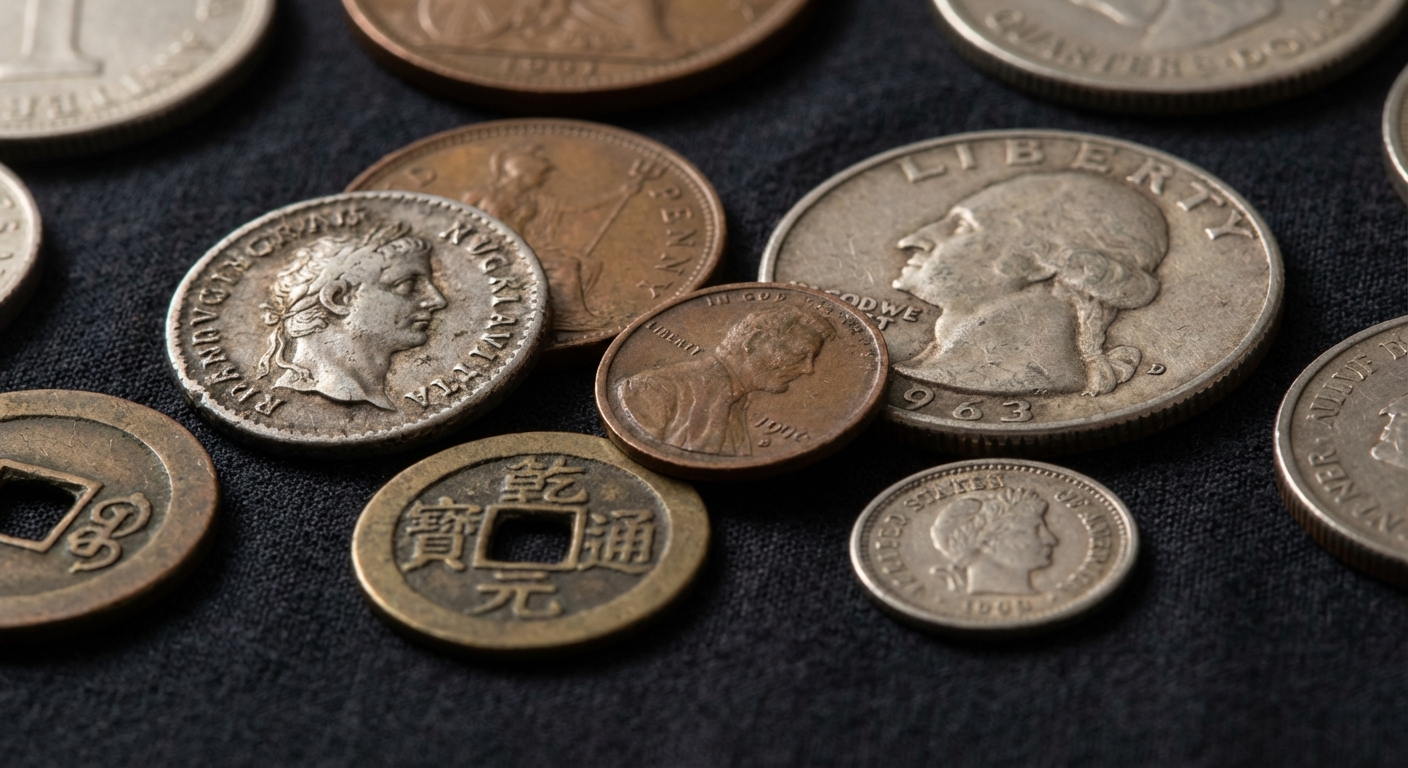
Mint marks, initials and small symbols are among the most important clues hidden on a coin’s surface. For coin collectors and numismatists, recognising these mint signatures is essential for correctly identifying where and when a coin was struck, who designed it, and whether it is a scarce variety or a common piece. Understanding mint signatures can dramatically change a coin’s place in your collection and sometimes its market value.
This article is written for collectors at all levels, from beginners sorting through pocket change to advanced numismatists cataloguing large collections. We will focus on practical, real-world examples from circulating and historical coins, explain how and why these marks are used, and show you how to read them with confidence.
By the end, you will know how to recognise mint marks, designer initials and other symbols, how to avoid common mistakes, and how to use modern online tools to research your findings. This article is for informational purposes only and does not constitute investment advice.
Basics and Definitions
In numismatics, the term “mint signature” can be used broadly to describe any intentional mark that links a coin to its origin or creator. The three most common forms of mint signatures encountered by collectors are mint marks, mintmaster or assayer marks, and designer or engraver initials.
A mint mark is usually a letter or small symbol that identifies the mint facility where the coin was produced. For example, modern United States mint marks include P (Philadelphia), D (Denver), S (San Francisco) and W (West Point), used to distinguish output from different mints. (usmint.gov)
Mintmaster marks or assayer marks originated in ancient and medieval coinage. These are symbols or initials identifying the official responsible for the quality and fineness of the coinage. In early Greek and Roman coinage, such marks were used to trace problems such as underweight or debased coins back to a specific mint or official, sometimes with severe legal consequences. (en.wikipedia.org)
Designer or engraver initials are small sets of letters, often near the rim or part of the design, indicating the artist who created the coin’s motifs. On many modern coins worldwide, including U.S. issues like the Mercury dime and Peace dollar, the initials of engravers such as Adolph A. Weinman or Anthony de Francisci appear discreetly on the obverse or reverse. (en.wikipedia.org)
Finally, collectors may encounter secondary symbols such as privy marks, which are small devices added to a design to identify a specific mint, commemorate an event or distinguish a limited issue. Many world mints employ privy marks on bullion and commemorative issues as a modern extension of the traditional mint mark concept. (en.wikipedia.org)
Detailed Explanation
Mint marks developed historically as a quality-control and accountability tool. In antiquity, if coins from a certain mint were found underweight or debased, authorities could trace the problem through the mint mark or magistrate symbol and punish responsible officials. This practice was strongly formalised under the Roman Empire, where mint marks often combined letters for the mint, the workshop and the official in charge. (en.wikipedia.org)
Over time, mint marks evolved into a vital cataloguing tool for collectors. In the nineteenth century, numismatists often sought one coin per date, paying little attention to where it was struck. That changed significantly after the publication of A. G. Heaton’s work in 1893, which showed that coins from certain branch mints were much scarcer than those from main mints, making mint marks critical for understanding rarity and value. (en.wikipedia.org)
Modern mint mark systems vary by country. The United States generally uses single letters taken from city names, such as D for Denver and S for San Francisco, while some European nations historically used more complex codes. Germany, for instance, assigned letters that do not match the city initials in a straightforward way (A for Berlin, D for Munich, F for Stuttgart, etc.). Spain historically used stars with different numbers of points, sometimes incorporating tiny dates within them, to indicate different mints and striking years. (en.wikipedia.org)
Designer initials and small symbols serve a different purpose: they credit and identify the artist. On the U.S. Mercury dime, the designer Adolph A. Weinman placed his initials “AW” on the reverse, while the mint mark (D or S, or blank for Philadelphia) appears in the field between the words and devices. (en.wikipedia.org)
Similarly, on the Peace dollar, the mint mark D (Denver) or S (San Francisco) is found above the eagle’s tail on the reverse, while coins without a mint mark are from Philadelphia. This placement convention—mint mark in a fixed, standardised location—allows graders and collectors to check origin quickly, especially when assessing scarce dates and varieties. (en.wikipedia.org)
Mint signatures also respond to policy changes and economic pressures. For example, the U.S. Coinage Act of 1965 temporarily removed mint marks from circulating coins between 1965 and 1967 to discourage hoarding during the transition away from silver. When mint marks returned in 1968, their position moved to the obverse on many denominations. (usmint.gov)
In the twenty-first century, mint marks and privy marks have been used creatively to stimulate interest in coin collecting. A good example is the 2019–2020 quarters struck at West Point with a W mint mark and placed directly into circulation in limited numbers, intended specifically to excite collectors and drive demand for new issues. (en.wikipedia.org)
Practical Step-by-Step Guide
Recognising mint signatures effectively requires a systematic approach. Below is a step-by-step method you can apply to almost any coin in your collection.
Step 1: Identify the Country and Denomination
Begin by confirming the country of issue and denomination from the main legends and design. This information will determine which reference works you should consult and which mint mark conventions apply. For instance, U.S. quarters, German marks and Spanish pesetas use very different systems for indicating mints and dates. (en.wikipedia.org)
Step 2: Learn Standard Mint Mark Locations
Most mints place their marks in consistent spots on each type. For U.S. coins, mint marks might appear near the date on the obverse, on the reverse field, or beside key design elements, depending on the series. The Mercury dime’s mint mark lies between the word “ONE” and the olive branch; the Peace dollar’s mark sits above the eagle’s tail feathers. (en.wikipedia.org)
Use a high-quality printed or digital catalogue for your series—such as standard world coin catalogues or national mint guides—to learn these default positions. Over time, you will memorise the common locations for your favourite series.
Step 3: Use Proper Lighting and Magnification
Mint signatures are intentionally small and can become faint due to wear, weak strikes or cleaning. Work under strong, diffused light and use a 5x–10x loupe. Tilt the coin at different angles so that raised letters and symbols catch the light. This is especially important for detecting barely visible initials or symbols on older or heavily circulated pieces.
Step 4: Distinguish Mint Marks from Designer Initials and Bankers’ Marks
Beginners often confuse different types of marks. Mint marks are part of the official die and appear in the same place on every coin of that type from that mint. Designer initials are also part of the die but usually appear near the rim, close to the portrait or central motif, and remain constant regardless of mint. On some ancient and Roman coins, additional small punch marks—often called bankers’ marks—were applied later to test or validate coins, and are not official mint signatures. (en.wikipedia.org)
Consult photographs of the same type in reputable catalogues or auction archives. If the mark you see does not appear consistently in these images, it may be a bankers’ mark, test punch, countermark or post-mint damage rather than a mint mark.
Step 5: Confirm with Authoritative References
Once you believe you have identified a mint mark or symbol, confirm it using multiple references. Standard national or world catalogues will list all official mint marks, with their dates and locations. Auction catalogues and online databases maintained by major auction houses or mints provide high-resolution images and descriptions that can verify what you see on your coin. (en.wikipedia.org)
Step 6: Record Mint Information in Your Inventory
For good coin storage and collection management, record the mint mark and any initials or symbols in your inventory system. At a minimum, note the date, mint mark, variety and any visible designer initials. Over time this practice makes it easier to track duplicates, spot holes in a series (such as missing mint/date combinations) and share accurate information if you later submit coins for grading or sell them.
Common Mistakes and How to Avoid Them
Even experienced collectors occasionally misread mint signatures. Being aware of common pitfalls can save time and prevent costly errors in coin collecting and coin grading decisions.
Mistake 1: Confusing Damage or Dirt for a Mint Mark
Random scratches, corrosion spots or dirt lumps can look like letters at a glance. To avoid this, always examine the suspected mark under magnification and compare it with authoritative images. A genuine mint mark should have consistent shape and position across coins of the same type; irregular blobs that vary from example to example are likely not official. (en.wikipedia.org)
Mistake 2: Ignoring the “No Mint Mark” Default
In many systems, especially U.S. coinage before the late twentieth century, the absence of a mint mark implies that the coin was struck at the main mint (often Philadelphia). For example, early Mercury dimes and Peace dollars without a mint mark are Philadelphia issues. New collectors sometimes assume a missing mark is an error or rare variety when it is actually the most common state. (usmint.gov)
Mistake 3: Overlooking Temporarily Suspended Mint Marks
Historical policy changes can cause confusion. The U.S. Mint removed mint marks from circulating coins from 1965 to 1967, meaning no P, D or S marks appear on those dates, regardless of mint. Collectors unfamiliar with this history can waste time searching for non-existent mint varieties. Learning the basic chronology of mint mark policies for your chosen series prevents this error. (usmint.gov)
Mistake 4: Misreading Altered or Added Mint Marks
Some counterfeits are genuine coins with altered mint marks—often changing a common issue into a rare date/mint combination by adding or modifying a letter. Under magnification, an added mint mark may show disturbed metal, different texture or misalignment. Comparing the suspected coin with certified examples and, where appropriate, seeking a professional grading opinion is the safest way to avoid being misled by such alterations. Major grading services and auction houses regularly publish diagnostics for key-date mint mark forgeries. (en.wikipedia.org)
Mistake 5: Assuming All Symbols Are Mint Related
Not every symbol on a coin is a mint mark or designer initial. Privy marks, commemorative symbols and bankers’ marks can all appear on the same piece. Treat each symbol as a separate question and research its specific meaning in catalogues or academic publications rather than assuming that every device is a mint signature. (en.wikipedia.org)
Connection to Online Tools
Modern collectors have access to a wide range of online resources that make identifying mint signatures far easier than in the past. Digital coin catalogues and official mint websites provide searchable databases of coins, including information on mint marks, designer initials and privy marks. High-resolution images from major auction houses and museum collections allow you to compare your coin directly to well-attributed examples and verify subtle details of the mint signature. (en.wikipedia.org)
Inventory and collection-management platforms let you record each coin’s date, mint mark, variety and grade, and often support attaching your own photographs. Some systems allow you to generate printable coin cards or online gallery views that display mint information clearly. These tools are especially helpful for large numismatic collections, where tracking duplicates, upgrades and missing mint/date combinations manually can become difficult over time.
Summary
Mint marks, initials and symbols are small details with large importance in numismatics. Historically created to ensure accountability and quality, they have become indispensable tools for identifying origin, varieties and designers, and for understanding relative rarity across a coin series. Learning to recognise and interpret these marks transforms casual coin collecting into serious, informed study. (usmint.gov)
To use mint signatures effectively, follow a consistent process: learn standard mark locations for each series, use good lighting and magnification, distinguish mint marks from designer initials and later bankers’ or test marks, and confirm your conclusions with authoritative references. Recording this information carefully in your inventory supports better coin storage, grading decisions and long-term collection planning.
Finally, remain cautious about damaged, altered or added marks, and remember that in some systems the absence of a mint mark is meaningful in itself. Combined with reliable online tools and reference works, these skills will help you build a better-documented, more enjoyable numismatic collection.
Frequently Asked Questions (FAQ)
Where is the mint mark on my coin?
The location of a mint mark depends on the country, denomination and design. For each series, consult a trusted catalogue or official mint guide; they will show typical positions, such as near the date on the obverse or in a specific field on the reverse. Once you know the standard location, use a loupe and good light to check your coin.
What does it mean if my coin has no mint mark?
In many systems, especially older U.S. coinage, no mint mark usually indicates the main mint (such as Philadelphia). However, some periods saw mint marks suspended altogether, and other countries follow different rules. Always check how mint marks were used for the particular country and era before assuming that missing marks are rare or special.
How can I tell if a mint mark has been added or altered?
Examine the area under magnification and compare it with images of certified examples. Added or altered mint marks may show tool marks, irregular shapes, different surface texture or incorrect positioning. For valuable coins, consider submitting the piece to a reputable third-party grading service that routinely identifies such forgeries.
Are designer initials as important as mint marks for collectors?
Designer initials do not usually change a coin’s basic value in the way a different mint mark can, but they matter for understanding the coin’s artistic and historical context. Some collectors specialise in the work of particular engravers, and certain initial varieties or placement differences can be of numismatic interest.
Which online tools are best for identifying mint marks and symbols?
Look for official mint websites, established digital coin catalogues and the archives of major auction houses, which provide detailed descriptions and photographs of coins with known mint marks and initials. Pair these with a collection-management app or spreadsheet so you can record and organise the mint information you discover.
